


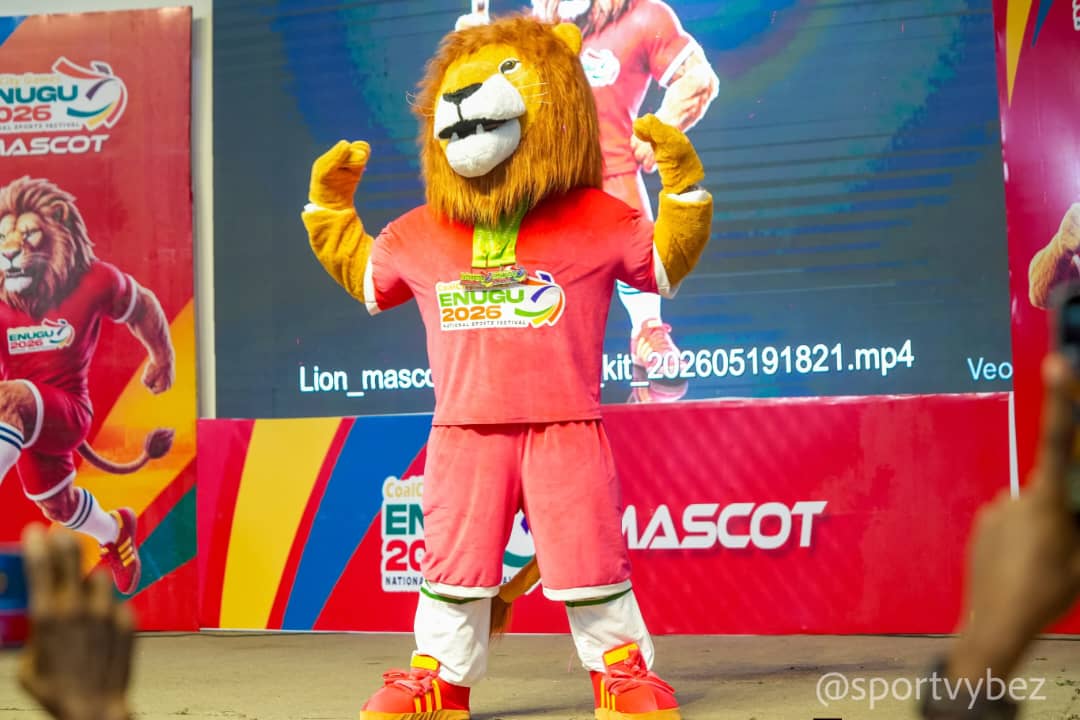
Postponement of National Sports Festival, Enugu 2026 : Wy We Must Act Now Before Our Industry Loss Trust
By Eche Amos FCBS, ANIPR
As a concerned sports stakeholder, a sports journalist with years of practice, deep background in sports management, and one who has travelled around the world, from Africa to Europe, and Asia, to cover and report sports, my honest reaction to the recent postponement of the 23rd National Sports Festival billed to hold in Enugu, the Enugu State Capital, this month, is one of deep disappointment, frustration, but not surprise – because we have seen this movie before.
The 23rd National Sports Festival, NSF, tagged “THE COAL CITY GAMES”, in Enugu, was scheduled for November 27th to December 11th, 2026, with contingents due to arrive November 25-26.
Just days to the opening ceremony, Enugu State asked for a postponement because the Nnamdi Aizikiwe Stadium, otherwise known as ‘The Cathedral’, and the Agwu Games Village were not ready.
The National Sports Commission has now accepted the shift to May, 2027, with the Local Organizing Committee, LOC, tendering an unreserved apology for the inconvenience.
That apology, to me, while welcome, does not pay the bills already incurred.
To me, it is a failure of planning, not fate.
Enugu did not get hosting rights last month. The Host State Agreement was signed in January, 2025, with Governor Peter Mbah himself promising a brand-new Games Village and a completely renovated stadium.
The National Sports Commission even broke with tradition by announcing Enugu early precisely to give “ample planning time”.
Yet, just three days before the Games, the LOC was still assuring us that “Enugu is good to go” and that the flag-off date was sacrosanct”.
Then, the Athletics Federation of Nigeria, AFN, inspection reportedly found the track would need, at least, 45 more days to be ready.
That contradiction tells us everything: either inspections were not honest, or the warnings were ignored. Athletes should never be the last to know that the house is not ready.
And this is now a pattern. The National Youth Games was postponed; the Maiden Inter-Mediate Games was postponed. In fact, the last edition of the National Sports Festival tagged “GATEWAY GAMES” in Ogun State, also suffered, at least, two postponements before eventually holding in May, 2025.
Believe me, if we normalize this, the Festival loses its meaning as a biennial calendar event.
The impact of the recent postponement of the National Sports Festival is unquantifiable.
Athletes have been in camp since September or thereabouts. They peaked, tapered, dieted, and sacrificed school, work, and family for November 27.
A six-month shift destroys peaking cycles. For age-grade athletes, and para-athletes, and those on the verge of national team selection, May 2027 may be too late
Psychologically, it breeds cynicism in the athletes: “Why should I kill myself in camp if the Games will shift again?”
States like Nasarawa, Imo, Lagos, Delta, Kano, Edo, Bayelsa, Plateau, Benue, and others had already moved into closed camp. That is money spent on feeding, accommodation, allowances, transport, kits, medicals, and screening that cannot be fully recovered.
Many States will now have to either keep athletes in camp at huge cost or demobilize and re-camp in 2027 – effectively paying twice for one Festival.
Sports Federations built their national calendars, trials, and commonwealth Games/African Games preparations around November/December. All of that is now disrupted.
Technical officials booked for the Festival now face clash with league seasons and school exams in May.
Sponsors, broadcasters, partners, transporters, and traders in Enugu who prepared for November/December have lost peak-season revenue. Nationally, it damages confidence in Nigerian sports as a reliable product to invest in.
Going forward, I strongly support the National Sports Commission’s new model of awarding hosting rights years ahead – Bayelsa for 2028, and Kaduna for 2030 have already been confirmed.
In principle, that is progressive. It is supposed to allow States to build, not rush.
But long-term rights without long-term accountability is a licence for complacency. A State can win the bid with beautiful PowerPoint presentations, sign an agreement, and then start work late because it knows the NSC will rather postpone than embarrass it by withdrawing the rights.
We must learn to separate intent from capacity.
On a stiffer point of view, the NSC and National Council on Sports must move from moral appeals to enforceable contracts.
There must be binding milestone-based host agreement. 24 months out, 18 months out, 12 months out, 6 months out, 90 days out – each with verifiable deliverables. Not LOC self-assessment, but independent inspection by NSC, relevant Sports Federations, and an external engineering firm.
Then comes the 90-day irremovable gate. If by 90 days to the Games, 80% of competition venues are not certified competition-ready, the NSC must automatically trigger a contingency plan – either move to a ready backup venue within the host State, co-host with a neighbouring State, or move the Festival to a standby State, like Delta, or Edo. No last-minute postponement, like has happened now.
Also, host States should deposit a performance bond/escrow, like is done in the Nigeria Premier Football League, NPFL, and a portion of the Federal Government’s hosting support should be tied to milestones. If a State causes a postponement, it should contribute to a Stakeholder Compensation Fund to partially reimburse States for wasted camping costs.
Additionally, any postponement beyond 30 days must automatically guarantee that eligibility, age limits, and qualification standards are frozen as at the original date, so no athlete is punished for the host State’s failure.
Furthermore, there should be transparent readiness dashboard where monthly public updates with photos, videos, and percentage completion for each venue – from the moment rights are awarded. We all know secrecy breeds late surprises.
On the part of the National Sports Commission, they must stop reassuring States until facilities are certified. Enugu was said to be ready to host the nation by the NSC, but the same host State came out later to ask for a postponement. That, to me, erodes trust.
In conclusion, despite the anticipated postponement, Enugu may still deliver a world-class Festival in May 2027.
I genuinely hope it does. The investment in the Agwu Games Village – a 1000-bed hostel, FIFA-standard pitch, indoor courts, and athletics track – can be a lasting legacy if completed properly and timely.
However, in all honesty, the postponement was highly avoidable. It was not caused by rain, war, or an act of God(force majeure). It was caused by late commencement, poor project monitoring, and somehow rewarding promises over delivery.
As stakeholders, we must stop clapping for apologies and start demanding systems. Our athletes deserve a calendar they can trust.


