


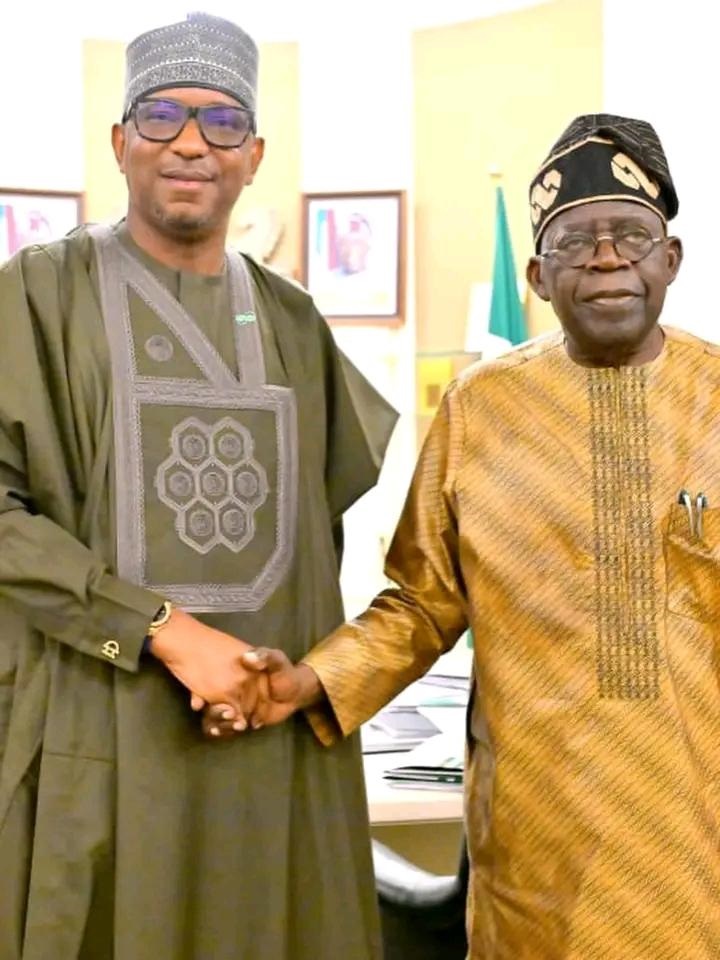
S.O.S To President Bola Ahmed Tinubu To Constitute NSC Board
Your Excellency,
I write this open letter with profound respect for your office and with genuine concern for the future of Nigerian sports.
Your administration’s decision to restore the National Sports Commission (NSC) was widely welcomed by sports stakeholders who believed that the initiative would usher in a new era of institutional reforms, accountability, professionalism and sustainable sports development.
However, there are growing concerns about the structure, composition, direction and operational priorities of the present Commission under the leadership of its Chairman, Mallam Shehu Dikko.
The fundamental question is this: Can an institution established by law effectively discharge its responsibilities when its statutory membership and governance structures have not been fully constituted?
Your Excellency, this is not a question of personalities. It is a question of institutional integrity.
1. A National Commission Cannot Be Reduced to Two Principal Officers
The National Sports Commission is a statutory institution, not a private organisation belonging to its Chairman and Director-General.
The National Sports Commission Act, 2023, particularly Section 2(1), provides for a broad membership of the Commission,incorporating representatives of different sports institutions, government establishments, professional groups and other relevant stakeholders.
Of particular importance is Section 2(1)(q), which provides for six Chairmen of State Sports Councils representing the six sports zones on a rotational basis.
Section 2(2) further provides that the Chairman and members of the Commission shall be appointed by the President.
Furthermore, the Schedule to the Act establishes the institutional framework for conducting the Commission’s business and provides for a quorum of 10 members, including the six zonal representatives.
Your Excellency, where are these statutory members?
Where are the representatives who should provide the necessary institutional balance, geographical inclusion and stakeholder participation?
Why should a Commission established under an Act of the National Assembly operate without the full participation of the membership contemplated by that legislation?
We respectfully urge you to appoint and inaugurate the outstanding members of the Commission in accordance with the Act.
Nigeria has six geopolitical zones, and sports administration must not become an exclusive preserve of two individuals.
A National Sports Commission must reflect national representation, collective responsibility and institutional accountability.
We are not suggesting that every vacancy automatically invalidates every decision of the Commission. However, decisions taken without compliance with the statutory requirements for meetings, quorum and proper authorisation could raise serious questions of legality and may be subjected to judicial scrutiny.
2. Questions About Shehu Dikko’s Previous Administrative Record
Your Excellency, the appointment of Mallam Shehu Dikko as Chairman of the NSC came with considerable expectations.
However, his previous experience in the administration of Nigerian club football deserves a thorough and objective assessment.
During his years in football administration, particularly his tenure as Chairman of the League Management Company (LMC), Nigerian football stakeholders raised concerns about the management of the domestic league.
Questions were raised about the administration of club finances, the payment of league prize money, referees’ indemnities and the general welfare of participating clubs and match officials.
There were also concerns about the effectiveness of the league’s governance and board representation.
We believe that these issues deserve an independent institutional review rather than being dismissed as mere criticism.
If clubs that earned their positions through sporting merit experienced delays or difficulties in receiving their deserved prize money, what mechanisms were put in place to protect their interests?
If referees’ indemnities remained outstanding in certain instances, who was held accountable?
What safeguards were established to ensure that participating clubs were not exposed to avoidable financial difficulties?
We also invite the NSC to publish the relevant records of the LMC’s governance structure, board appointments and financial obligations during his tenure.
The purpose is not to prejudge Mallam Dikko, but to establish whether the lessons from the previous administration have been incorporated into the present sports reform agenda.
Reforming Nigerian sports requires more than occupying a leadership position; it requires demonstrable institutional competence, transparency and measurable results.
3. The NSC must not become a substitute for every Sports Institution
Your Excellency, another issue requiring urgent attention is the apparent overlap between the responsibilities of the NSC and those of the national sports federations.
The NSC Act gives the Commission important responsibilities in sports development, training, coordination, financial assistance and supervision.
However, the exercise of these powers must be guided by the law, established procedures and respect for the administrative responsibilities of the recognised sports associations.
The Nigeria Football Federation (NFF), for instance, has its own constitutional and administrative responsibilities in the organisation of Nigerian football.
The same principle applies to the Nigeria Basketball Federation and other national sports federations.
Why should institutional responsibilities become blurred to the extent that the Commission appears to be undertaking activities that ought to be coordinated with the respective federations?
Why should the distinction between regulatory oversight, financial support and operational administration become increasingly difficult to identify?
Where the NSC provides financial assistance for athletes’ participation in competitions, what are the established procedures, accountability mechanisms and respective responsibilities of the Commission and the relevant federation?
Who authorises the expenditure? Who accounts for the funds? Who takes responsibility for technical and operational arrangements?
These are legitimate questions in a transparent sports administration.
We are not suggesting that the NSC should abandon its statutory responsibilities to support sportsmen and women. Rather, we insist that those responsibilities must be exercised transparently and without unnecessary duplication of the functions of other institutions.
4. The NBBF Electoral Controversy Should Concern the Presidency
Your Excellency, the recent electoral controversy surrounding the Nigeria Basketball Federation (NBBF) provides another reason to examine the governance structure and supervisory responsibilities of the NSC.
The October 2026 NBBF election generated serious disagreements, petitions and litigation.
Former D’Tigers captain Olumide Oyedeji challenged the outcome, while other stakeholders raised concerns about the credibility and fairness of the electoral process.There were also allegations concerning changes to the representation of state basketball associations shortly before the election.
A Federal High Court matter challenging the legality of the electoral congress was also reported, while the election proceeded.
These allegations have not been judicially established, and it would be inappropriate to pronounce anyone guilty of electoral manipulation without evidence.
Nevertheless, the circumstances surrounding the election raise important questions about the effectiveness of the NSC’s supervisory role.
How were electoral guidelines implemented?
Were all eligible stakeholders treated fairly?
Were complaints investigated before the election proceeded?
What measures were taken to guarantee that the process enjoyed the confidence of all participating interests?
The NSC should not merely announce electoral outcomes and expect aggrieved stakeholders to accept them. Its responsibility should include ensuring that the electoral processes it supervises are transparent, credible and consistent with the relevant federation’s constitution and applicable international requirements.
The crisis in Nigerian basketball should not be allowed to become another avoidable institutional embarrassment.
5. Where are the lasting Sports development structures?
Your Excellency, Nigerians want to see tangible improvements in sports infrastructure and institutional development.
The NSC should be able to present a comprehensive scorecard of its achievements.
How many new sporting facilities have been constructed or rehabilitated?
What concrete improvements have been made to football infrastructure?
What is the present state of basketball courts across the country?
What has been done for wrestling, boxing, athletics, judo, karate, table tennis and other sporting disciplines?
What policies have been introduced to strengthen grassroots development, school sports, coaching education and talent identification?
How much Federal Government funding has the Commission received since assuming office, and how has the money been deployed?
What measurable benefits have Nigerian athletes, coaches, clubs and sports administrators received?
These are questions that should be answered with documents, figures, project locations and verifiable evidence.
Sports development must be measured by what is built, what is improved, what is sustained and what is achieved.
It should not be measured by press statements, official trips, ceremonial appearances or the number of announcements made.
6. Our Appeal to President Tinubu
Your Excellency, we respectfully request that you:
Immediately constitute and inaugurate the full statutory membership of the NSC in accordance with Section 2 of the National Sports Commission Act, 2023.
Ensure the inclusion of the six zonal representatives provided for under Section 2(1)(q), alongside all other statutory representatives.
Direct the NSC to publish its governance structure, membership, standing committees, meeting records and procedures for statutory decision-making.
Order an independent assessment of the Commission’s activities, expenditure, achievements and financial commitments since its establishment.
Establish clear operational boundaries between the NSC and the national sports federations, ensuring that supervision does not unnecessarily become interference in their legitimate administrative responsibilities.
Direct an independent review of the complaints and unresolved controversies surrounding the recent NBBF electoral process, without prejudging the outcome of pending judicial proceedings.
Demand a comprehensive sports development scorecard covering infrastructure, grassroots participation, athlete welfare, coaching development and federation support.
Ensure that the Commission develops sustainable policies and institutional structures that will outlive the tenure of its present leadership.
Conclusion: Save the Institution before the Institution loses Public confidence
Your Excellency, the establishment of the National Sports Commission was intended to strengthen the Nigerian sports administration.
It must not become another institution where the concentration of authority in a few individuals takes precedence over collective governance, statutory compliance and accountability.
We believe that the inauguration of the full statutory membership will provide the necessary institutional balance, broaden stakeholder participation and strengthen public confidence in the Commission.
Nigeria’s sports sector is too important to be administered without the necessary institutional checks and balances.
The country needs a Commission that builds sporting infrastructure, develops policies, strengthens federations, protects athletes’ interests and promotes accountability.
It does not need an institution whose activities cannot be properly distinguished from those of the bodies it is expected to support and supervise.
We respectfully urge President Bola Ahmed Tinubu to intervene now, ensure the proper constitution of the NSC and restore the institutional purpose for which it was established.
A National Sports Commission must be national in representation, statutory in operation, collective in decision-making and accountable in performance.
The future of Nigerian sports deserves nothing less.
Yours faithfully,
*Sunday Agunbiade (Mr VAR)*
Sports Stakeholder and Sports Media Practitioner, Ibadan, Oyo State, Nigeria.


